
Steel is strong, durable, and widely used in modern buildings. Yet, it is also an ever-present fire hazard. When exposed to high temperatures, steel loses its structural strength, becoming less rigid and more vulnerable under heat. Once that rigidity is lost, the structure can quickly become unstable or even collapse. This is where cementitious fireproofing plays a vital role, providing a protective barrier that insulates the steel, slows heat transfer, and helps maintain the building’s integrity during a fire.
That’s where fireproofing can save the day. It slows the heat transfer to the underlying steel structure, keeping it below the critical tipping point.
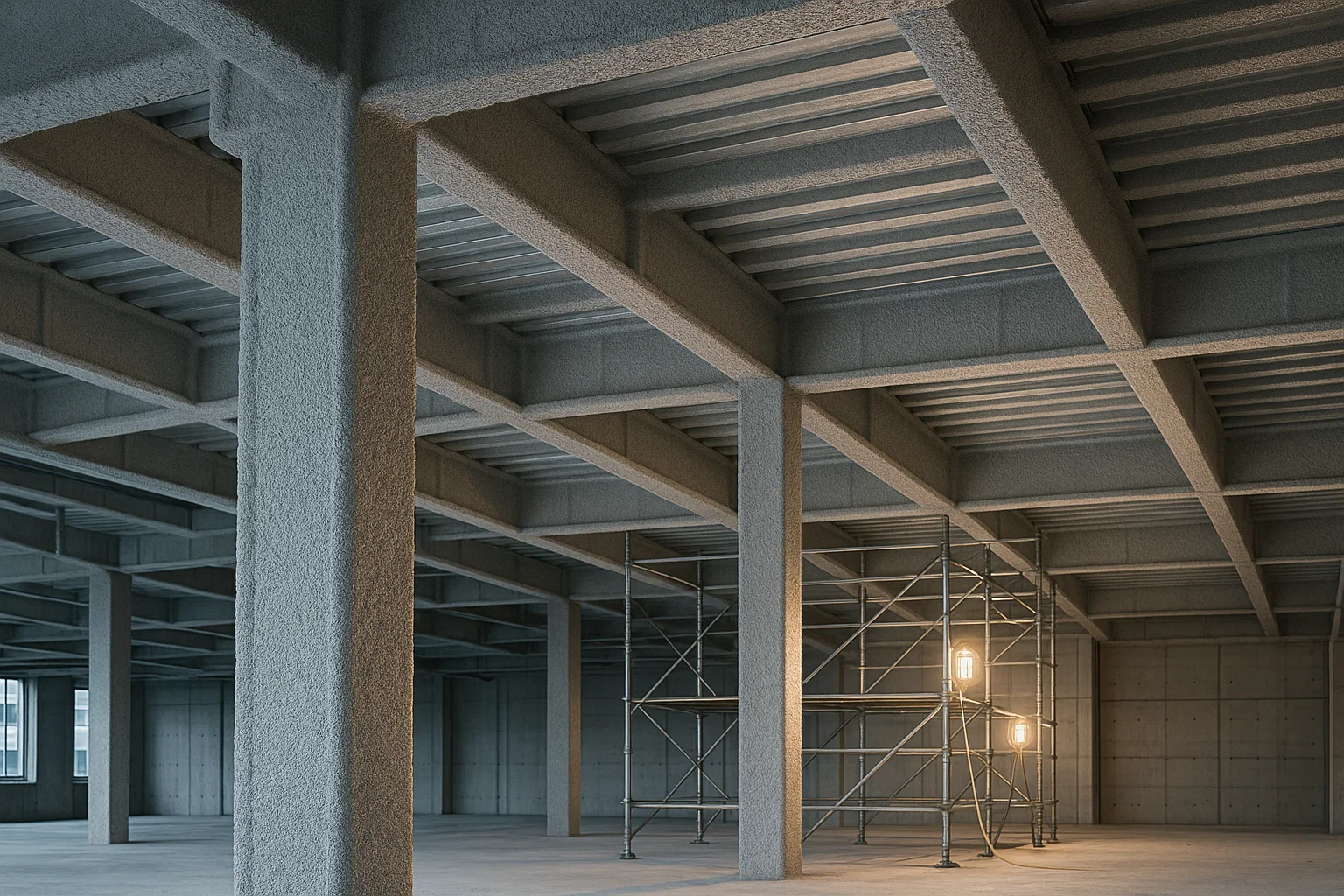
Cementitious Coatings: An Essential Part of Passive Fire Protection Systems
Passive fire protection measures, like fire doors, sealed service penetrations, and cementitious coatings, slow the spread of fire. They provide time for occupants to reach escape routes and evacuate safely. They also reduce structural damage.
Passive fire systems form just one component of a comprehensive fire safety system. They work hand in hand with fire detection systems, like smoke detectors and fire alarms. These systems alert building occupants to a fire hazard. Add to this active fire protection systems such as fire hoses, fire extinguishers, and fire sprinkler systems, and you have a mix of active and passive fire protection systems, as required by the Fire Protection Association.
Cementitious Fireproofing Loses Its Appeal
For many years, builders and architects have favoured cementitious fireproofing in fire suppression systems. These coatings are cost-effective and provide reliable protection for steel structures. Still, as structural designs evolved, building designers chose to adopt fireproofing solutions with a smoother, sleeker finish. Other products, like intumescent coatings, soon took the lead in the construction industry.
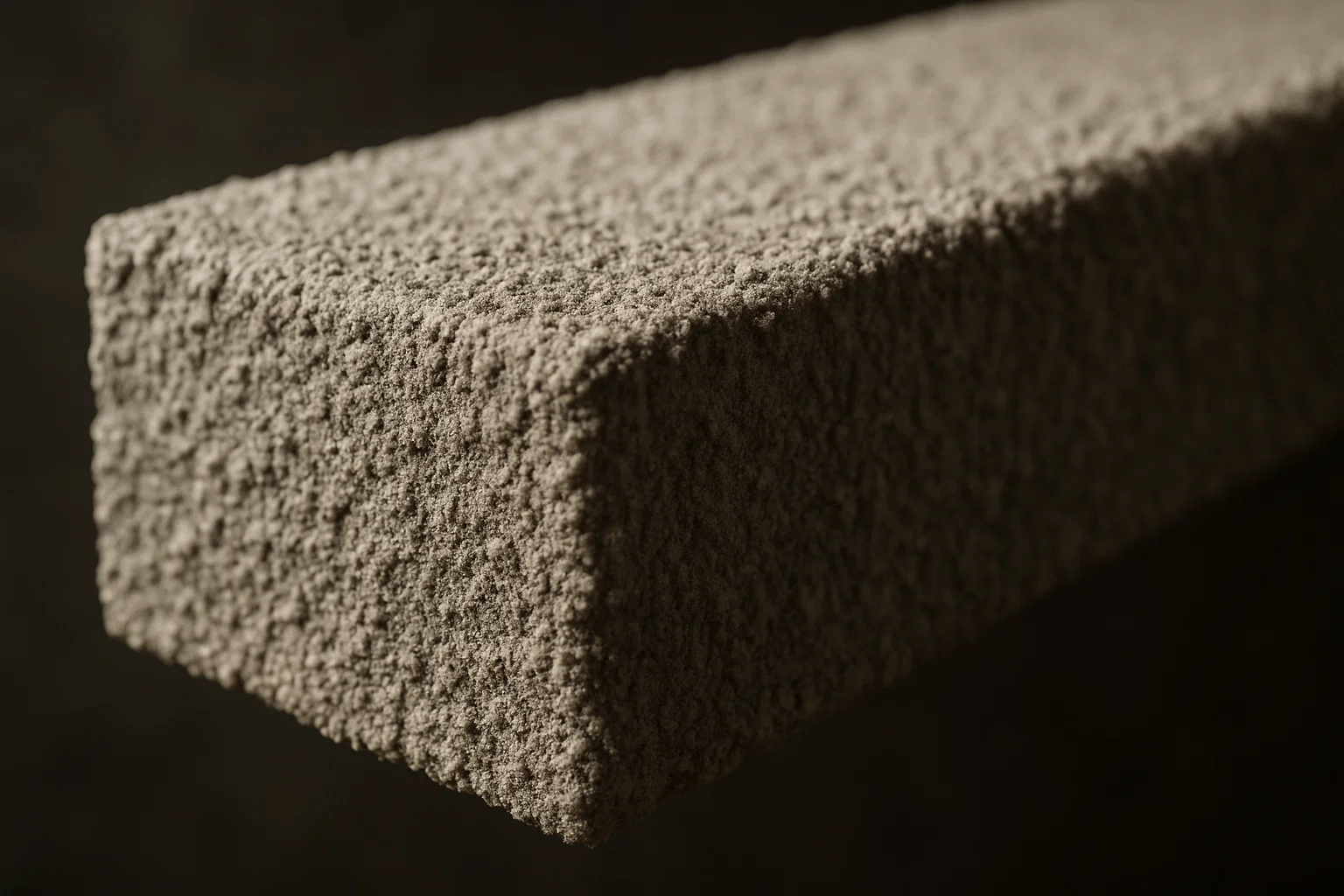
Cementitious Materials Make a Comeback
In recent years, cementitious fireproofing has been making a comeback in building systems and passive fire protection. Safety regulation changes, cost pressures, and the drive for sustainable solutions lie behind this increased interest. Meanwhile, formulation advances have improved the product, making it lighter, cleaner, and more durable than before.
Today, architects, engineers, and building contractors recognise cementitious fireproofing as a practical, affordable system that meets the demands of modern steel construction.
Understanding Cementitious Fire Protection Systems
Cementitious fireproofing is a blend of Portland cement, light aggregates, binders, and, sometimes, fibres, which provide reinforcement. The coating is sprayed onto steel surfaces, where it dries into a hard insulating coating. It is also sometimes used on walls as part of passive fire protection systems. Once applied, the material acts as a thermal barrier, slowing heat transfer during a fire. In so doing, it helps maintain the building’s structural strength and integrity, preserving it for much longer.
As passive fire protection systems go, cementitious coatings provide a simple, affordable way to achieve fire-resistant walls and structural supports. It allows time for occupant evacuation, and the fire and rescue service has more time to fight the flames using active fire protection measures.
Technically, cementitious fireproofing boosts the steel’s fire resistance rating. This rating measures how long a protected element will withstand fire exposure before it reaches a point of failure and loses its load-bearing capacity.
The fire-resistance rating is usually expressed in hours. Standardised laboratory testing, such as BS 476 in the UK, reveals the fire rating for building materials and structures.
Engineers expose coated steel components to a controlled furnace. The furnace replicates the temperature curve of a real fire to determine the fire safety standard and rating. Sensors measure how long it takes for the steel temperature to reach critical levels under load. The longer it takes, the higher the fire-resistance rating. The fire engineers assign the rating to the material, coating thickness, and design.
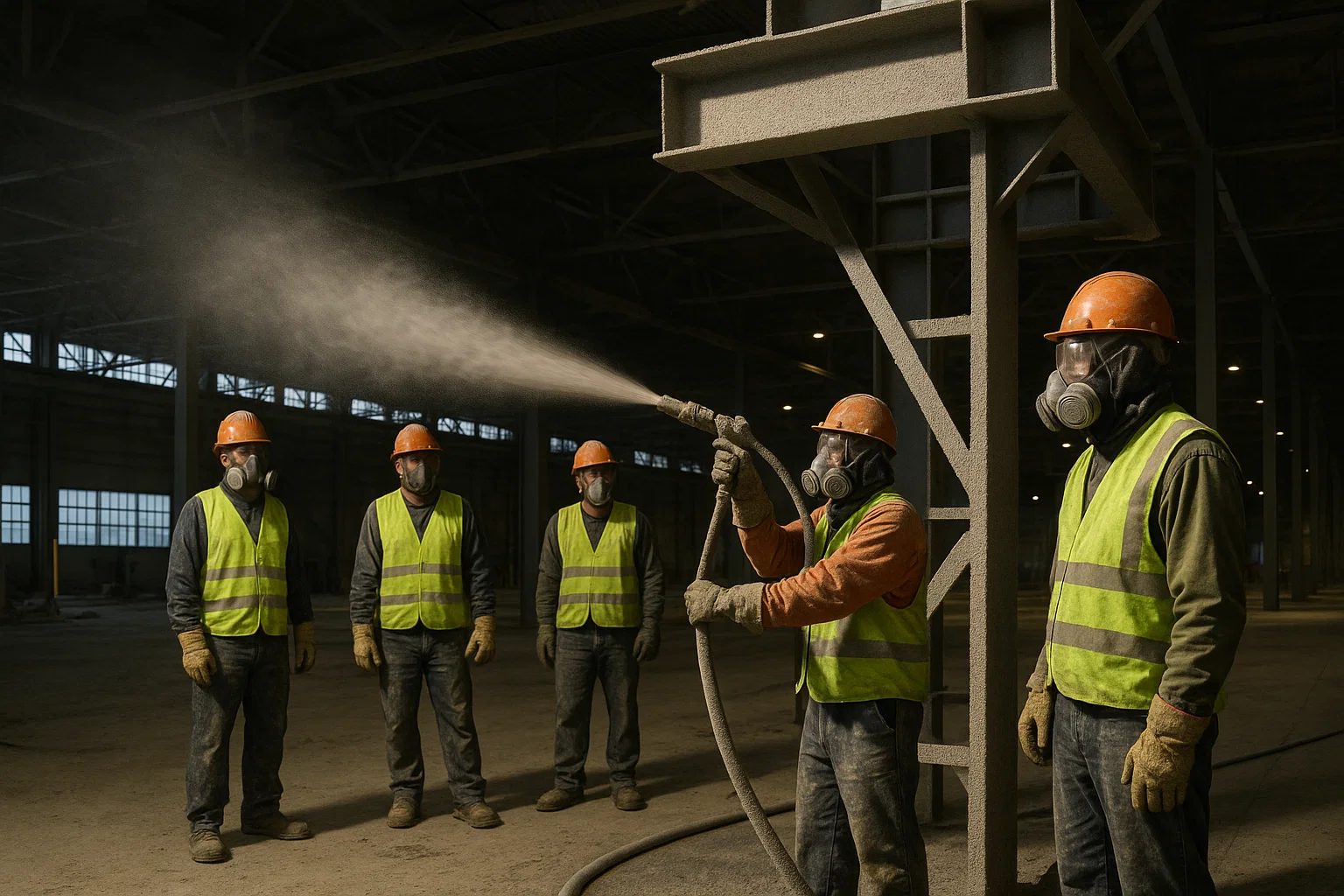
Fire-Resistant Cementitious Coating Application
Contractors apply cementitious fireproofing in one of two ways: wet-mix or dry-mix. In the wet-mix process, water is combined with the materials. Then, they are pumped through a hose and sprayed onto the surface.
If a dry-mix process is preferred, the dry materials travel through a hose to mix with water at the nozzle as they are sprayed onto the steel. A sprayed application ensures good coverage on all sides and in the corners. Effective fire-resistant barriers require a thick, uniform coating, regardless of the method used. For a smooth finish, use a trowel to smooth the outer surface.
Cementitious fireproofing is ubiquitous. Contractors use it on beams, columns, floor decks, and other critical structural elements. Recently constructed buildings often receive a coat of this material for building safety. It is also sometimes retrofitted to older buildings as part of the fire safety strategy.
Cementitious fireproofing delivers quick coverage and tough performance. It creates a durable protective layer that clings to steel, resisting heat, moisture, and impact damage.
Why Cementitious Fire-Resistant Materials Fell Out of Favour
For many years, cementitious fireproofing was the industry standard. Yet, recently, it developed a reputation as somewhat outdated. Intumescent coatings took the lead, becoming the popular choice in commercial buildings.
Intumescent coatings expand when heated. This expanded material forms a protective sheath around the steel, providing thermal insulation against extreme heat and limiting the spread of fire. They are smoother and have a better finish, making them popular in designs with exposed metal components.
At this time, building designers considered the rough, grey finish of cementitious coatings unappealing. High-end commercial projects demanded fire barriers with high-quality, good-looking finishes, and intumescent materials could provide this.
From a practical standpoint, older cementitious coverings were heavy and tended to crack. Moisture and vibrations could also degrade the material. Top coats were needed in high-humidity environments to protect the fireproofing from moisture. An extra coat of material costs more in labour and material.
As the early 2000s dawned, intumescent coatings dominated fireproofing in commercial steel construction. It was easier to apply and could create a watertight seal, preventing water from penetrating. As a result, the material protected the metal structures from both fire and corrosion.
This eventual dominance of intumescent coatings was especially evident in high-end developments. Meanwhile, production plants and warehouses continued to rely on cementitious coatings for protection. Here, the passive fire protection strategy demanded performance over appearance.
Still, intumescent paint is expensive, and unless the surfaces are properly cleaned and prepared before they’re coated, the paint will degrade and become less effective. These downsides rendered intumescent paint less popular, and cementitious fireproofing regained some of its earlier appeal.

Renewed Interest in Cementitious Fire Safety Materials
There are several reasons why cementitious fireproofing regained its former popularity. These include:
- Proven Performance: Decades of field data have proven the reliability of cementitious materials as passive systems. These coatings maintain structural integrity during a fire. They also resist mechanical impact damage.
- Cost Advantage: Cementitious fireproofing is significantly cheaper than intumescent coatings. Not only does the material cost less, it is also quicker to apply on large surfaces, costing less in materials and labour. In large-scale projects, savings are significant.
- Durability: Modern cementitious formulations have improved with time. Today, they are much tougher than they were. They’re lighter, more adhesive, and less prone to cracking. They don’t need much maintenance and can last for decades without noticeable degradation.
- Sustainable Construction: As the construction industry pursues greener practices, developers favour the use of low-Volatile Organic Compounds (VOC) and recyclable materials. Cementitious coatings contain no harmful solvents. Some of the newer blends use recycled materials, further reducing environmental impact. Cementitious fireproofing can help contractors to add certification points for sustainable construction in building design.
- Better Formulations: Manufacturers have refined cementitious fireproofing products. Newer formulations have better bond strength. They apply more smoothly and offer improved moisture resistance. These advances address many of the shortcomings that led to their decline.
- Stricter Safety Regulations: In recent years, more stringent fire codes and insurance requirements have underscored the need for established materials that meet building regulations. Cementitious systems have an advantage over newer products because accredited fire risk assessors trust them.
- Supply Chain Stability: As for procurement, rising costs and limited availability of specialty intumescent coatings have made cementitious alternatives more appealing. Cementitious coatings use raw materials that are readily available. So, prices are predictable and supply is consistent.
The table below compares cementitious fireproofing against intumescent fireproofing.
Technical Comparison: Cementitious vs. Intumescent Fireproofing as Fire Protection Measures
| Factor | Cementitious Fireproofing | Intumescent Coatings |
| Cost | Lower material and labour costs | Higher cost per square metre |
| Durability | Endurance under impact, moisture, and vibration | Vulnerable to mechanical damage |
| Appearance | Rough, industrial finish | Smooth, decorative appeal |
| Application | Fast spray or trowel application | Requires several layers and must be cured |
| Weight | Heavier; adds load to the structure | Lightweight |
| Fire Rating | Consistent, proven fire performance | Dependent on precise film thickness |
| Maintenance | Minimal human intervention required | Requires regular inspection and touch-ups |
| Best Suited For | Industrial, core, and concealed steel | Exposed architectural steel |
Many building contractors still use intumescent coatings for visible steelwork and aesthetic design elements. Yet, cementitious fireproofing is regaining its popularity for structural and concealed steel components. Modern buildings often use a hybrid system to achieve the best of both worlds. This enables performance with an appealing finish on revealed steel structures.
Cementitious fireproofing is regaining popularity in high-rise interior structures, industrial developments, and large commercial properties, meeting the demand for cost-efficiency, safety, and durability.

Cementitious Fire Protection Measures: Best Practice
Achieve the best results during specification and installation by following best practices.
- Surface Preparation: Steel surfaces must be clean and free from oil, rust, and loose material. Priming will help to ensure adhesion and durability.
- Environmental Conditions: Manufacturers specify temperature and humidity ranges for proper curing. Adhere strictly to the specified conditions.
- Thickness Control: Coating thickness establishes the fire rating. So, measure it throughout and inspect it during the application. The manufacturer provides fire-safety information specifying the correct thickness.
- Quality Assurance: Contractors must ensure that the cementitious coating conforms to British safety standards to ensure that the material performs as expected. British standards set the requirements for fire protective coatings. The standards include details about material application. They should also offer information on performance criteria and testing requirements.
- Maintenance: Inspect fire-coated surfaces during regular fire risk assessments. Repair any areas affected by moisture intrusion or mechanical impact.
- Regulatory Compliance: Ensure that the product meets local and national fire safety requirements for the intended structure.
Innovation and Sustainability: The Future of Fire Protection
Cementitious materials are advancing in step with the focus on safety, cost containment, and environmental sustainability. This industry-wide drive is speeding up, as researchers develop lightweight, fibre-reinforced cementitious coatings. These coatings adhere better and are less dense than previously. They offer the ideal passive measures for high-rise developments because they are much lighter than earlier formulations.
The drive for environmental improvements has also affected product development. Low-carbon cement and recycled mineral aggregates help manufacturers reduce the environmental footprint of fireproofing materials by using fewer VOCs.
Given the formulation improvements, cementitious fireproofing should remain popular in future large-scale construction. They should evolve to meet future regulatory and sustainability goals, as more contractors prioritise lifecycle performance.

The Role of Cementitious Fireproofing is Set to Grow
The return of cementitious fireproofing shouldn’t come as a surprise. This comeback is about celebrating what works in safeguarding lives. The materials have a long history in the building industry as reliable and affordable fire protection. They also provide environmental benefits at a time when more people understand the importance of pursuing sustainability in everything we do.
Cementitious fireproofing now provides a better, smoother finish thanks to improved formulations and application methods. It is lightweight and performs better than ever. As intumescent coverings rise in cost and fire safety regulations become stricter, more architects and structural engineers will likely turn to the tried-and-tested cementitious fireproofing method as part of the fire strategy.


